
The problem is never what you think.
The real drag on a growing business lives beneath the surface, in the work no one sees, the data no one trusts, and the friction wearing down your best people.
You don’t need a better strategy. You need to see what’s actually happening that’s pulling you off course.
Most people don’t need a place to start. They need a reset.
You’re not at the beginning. You’ve built it, rebuilt it, automated a piece of it, and documented it in a binder nobody opens. You’ve sat through a hundred strategy sessions and still aren’t getting the results.
That’s not a starting problem. That’s drift.
Fix the flow and most of your people turn into rockstars.
Almost nobody has a people problem. They have a flow problem that makes good people look slow, defensive, and stuck.
We don’t document a broken process so your team can follow it more faithfully. We fix how the work actually moves, and build toward a system that doesn’t need an instruction manual.
Three steps. Move from drift to direction quickly.
Map the Current
We get the truth on deck. A kickoff, a review of what you already have, one-on-one calls with up to eight of your people, then two half-day sessions in a room together.
Get your Nav Map
Where you are, where you’re trying to go, what’s in the way, and what to do first, sequenced by what it’s worth and what it fixes. Yours to keep. Hand it to IT, to us, or to anyone you like.
Disrupt the Current (optional)
When you’re ready to build, we have an integrated partner who connects your systems, builds the dashboards, and automates the tedious parts. Or take the map elsewhere. No hard feelings.
And you get to be in the room instead of running it. Someone else steers for once.
- You’re a $5M to $300M business in manufacturing, construction, the trades, regional banking, or professional services
- You have the budget and the authority to spend it
- You want to know what’s actually going on, including the parts that sting
- You care about results, not activity
- We’re not a fractional hire, and we’re not here to manage the employee you won’t.
- We’re not going to talk you into changing. You have to want it.
- If there’s no trust inside the building, this won’t fix it, and you’ll be unhappy with us for saying so.
- We don’t work with jerks. Life’s short.
Six months out
You can see your numbers, and you believe them. Decisions take days instead of quarters. Nobody’s building a report that no one reads. Your team has time to do their actual jobs.
One client took the Nav Map to IT and started building the next week. Another built it with us and threw a party.
With cake.
Start with five minutes.
The mini-diagnostic asks a handful of questions about how work really moves through your business, then shows you what’s most likely pulling you off course. It’s free, no email required, and there’s no call at the end unless you want one.
Map the Current
See how your business actually works, not how the org chart says it does.
Eight private conversations with the people who do the work. Two half-days in a room where they see the whole thing, end to end, for the first time. You leave with a Nav Map. What’s really happening, what to change, and what to do first.
Not sure this is your problem yet?
Most people don’t do this because the water is calm.
They do it because something forced the question.
- {{ item.mark }} {{ item.text }}
If none of those are true, this can wait. If two or three are, it’s already costing you.
We make it easy to spot the drift and move to direction.
Tap any phase to see what happens in it.
{{ item.body }}
{{ item.note }}
{{ item.body }}
{{ item.note }}
{{ item.body }}
{{ item.note }}
Across eight to ten people.
Nobody hires us to find these. We find them anyway.
 A team discovered that once a client signed, they treated the build as an internal to-do list, and left the customer sitting there wondering what happens next
- Field paperwork going missing on a routine basis, at a cost nobody had ever added up
- Sales and operations realizing that neither one understood what the other’s work actually required
- An admin spending their week chasing documents that a workflow could have been requesting on its own
- Monthly reports assembled by hand from numbers nobody fully believed
- A workaround the whole team still performs, built around a system limitation that was fixed years ago
Those hours in the room aren’t the cost of the Nav Map. They’re the reason anything changes. A document doesn’t get sales and billing to understand each other. Ten people looking at the same wall for a day does. The map is the artifact. The room is the work.
The line we hear most often, in some form, in almost every session:
“I had no idea you had to do all that. No wonder it takes so long.”
That’s not a process insight. That’s two departments stopping being annoyed with each other.
Before you decide.
You want to know what’s actually going on, including the parts that sting.
People can be honest without being punished for it.
The goal in the room is a better way of working, not accountability, not finger-pointing.
You put us with the people who really know how the work happens, not just the people who think they do.
You’re mid-launch on a lot of things at once. If you can’t yet tell what’s working, mapping it now gives you a snapshot of chaos. Give it three to six months.
It isn’t a real priority. If there’s no pain driving it, the map collects dust and we’ve both wasted a quarter.
You don’t actually want to change what you built. Some people want confirmation, not clarity. That’s a fine thing to want. It just isn’t this.
You could. Three things you’d give up. We’ve done it before and we know where it goes sideways, we’ll keep you on track when the room wants to solve one problem for an hour, and you get to participate instead of facilitate. You’ve been steering this whole time. You’ve never gotten to look at the map.
Probably a strategy session that produced a deck. This produces a map of how your business actually works, built from what your people said privately, with a sequenced list of what to do first. Different input, different output.
I understand, and the answer is on the other side of the conversation. The reason your last four fixes didn’t hold is that somebody skipped this part.
Then I’ll tell you, on the first call, and point you at what you do need. I’d rather send you somewhere else than take a project that won’t work.
Kickoff, materials review, up to eight private interviews, two half-days on site, the Nav Map, and a 90-minute debrief. Paced by your team’s calendar. Travel outside the Twin Cities is billed separately and we’ll cover it in the proposal.
Full engagement or nothing. We don’t cut it into pieces, because the pieces don’t work.
Thirty minutes, nothing to prepare. You tell us what’s going on, we’ll tell you whether we can help. If we’re a fit you’ll have a proposal within 24 hours and we can kick off as soon as your calendar allows.
Still figuring out whether this is your problem? Take the free mini-diagnostic →
Take a Sounding
One problem. Half a day. Someone whose only job is making sure you think it all the way through.
You bring the problem. I’ll facilitate, push on the thinking, help you see it differently, and move you towards a decision.
You already know what the problem is. You just can’t get to the bottom of it.
- You have one decision you keep circling and never landing
- You have three options and no honest way to choose between them
- You’ve had the same conversation four times and it resolves differently every time
- You’re about to commit real money and you want it pressure-tested by someone with nothing at stake
- Your leadership team agrees in the room and does something else afterward
- You need to think, and your calendar has quietly made that impossible
A sounding measures the depth at one exact spot. Not the whole lake. We go deep on one thing. One place, one question, and an honest answer about what’s actually down there.
We agree on one goal for the session, in writing, so we both know what a good day looks like. You send anything I should read first. I read it.
I’m part facilitator and part participant. I’ll keep us on the goal, slow you down when you’re racing toward an answer you already had when you walked in, and say the thing nobody in the room wants to say first. You get to think instead of run the meeting.
Your choice of output, below.
Documented.
A notetaker summary of the discussion, what was decided, and what’s still open.
Confidential.
No transcript, no record of who said what. Just the decisions and the open items.
Pick whichever fits the conversation. Sensitive topics get the second one by default, and I’ll ask before we start rather than after.
Two hours, virtual, just you.
90 minutes of thinking, 30 minutes of writing it down. One problem, one session, not a standing appointment.
Half a day, in person.
You and two or three of your leaders on a single problem.
A full day, in person.
For something with more moving parts, or when you want two related problems in one sitting.
On site, or somewhere else entirely. Sometimes getting out of the building is the whole point. Travel outside the Twin Cities is billed separately. Custom workshops on alignment, clarity, or priorities are available on request. Ask on the call.
TAKE A SOUNDINGTake a Sounding is for one problem you can already name. Work it through one on one, or bring a couple of your leaders and talk it out, in half a day with me.
MAP THE CURRENTMap the Current is for when you can’t name the problem, or there are twelve of them, and you need to see how the whole business actually works before you can prioritize anything. Your whole team.
If you’re not sure which, that’s what the call is for. I’ll tell you honestly, including if the answer is neither.
It isn’t strategic planning facilitation. I don’t run the annual offsite. I’ll help you think before you walk into it, or make sense of it afterward.
It isn’t a pep talk, and it isn’t therapy. I’m here to help you think, not to make you feel better about a decision you’ve already made.
It isn’t a standing engagement. These are one-offs by design. If you find yourself wanting a thinking partner every other week, tell me on the call and we’ll talk about whether that’s actually what you need.
Bring me the thing you keep putting off.
Thirty minutes, nothing to prepare. Tell me what you’re wrestling with and I’ll tell you whether a session would help, and which format fits.
Every business has someone quietly holding it together.
For twenty years, that was me.
Megan Effertz · Founder and CEO
I was the person who knew how it actually worked. Who caught the thing three steps upstream. Who translated between two departments that had stopped understanding each other. It never showed up on a job description, and it worked right up until it didn’t.
I built this company to make that work visible, so a business doesn’t have to depend on one person’s memory, goodwill, and weekends.
It’s also what I speak about. See the talks →

The job title changed. The job didn’t.
Marketing, sales, HR, technology, operations, a P&L of my own. Different companies, different industries, and every time the same thing. I was the person brought in to see what was really happening and say it out loud.
Sometimes that was translating what the engineers meant into something a customer could act on. Sometimes it was rolling three acquired competitors into one company without breaking the people who came with them. Sometimes it was leading a bank through a pandemic and building the process for a federal loan program that didn’t exist yet.
The common thread was never the function. It was this. You want to go there, here’s where you actually are, and here’s what it will take. Then getting the team to believe it enough to do it, with enough room to say “this won’t work” before we built it wrong.
That worked because people trusted me with the truth. It’s the only reason any of it worked.
I built this service inside a company first.
At a logistics and fulfillment firm serving Fortune 500 clients, I built a solutions group that assessed how a client’s work actually moved, showed them what we could build for them and what it would change, then handed the roadmap for the tech team to build.
Same work. Different letterhead.
Later I bought a marketing company, grew it, and sold it. I ran a business magazine and spent two years listening to Minnesota executives describe what was and wasn’t working. I did fractional work and kept seeing the same patterns I’d watched from the inside for two decades. Good people, working hard, in a process nobody had looked at end to end since it was invented.
So I stopped being the glue and started teaching companies how to work without it.
Thinking is the work.
Leaders have been trained to move fast. Hit the number, clear the queue, put out the fire, cross it off the list. Somewhere in there, think time disappeared. Most of what I get hired to fix is the accumulated cost of decisions made at speed by people who never got time to look at the whole thing.
I’m not interested in documenting a broken process so your team can follow it more faithfully. I’m interested in why the flow is broken, what everyone knows and has stopped saying, and what becomes possible when ten people finally see the same picture at the same time.
Fix the flow and most of your people turn into rockstars. They were never the problem.
“The best moment in this work isn’t the map. It’s when something a team had written off as impossible turns out to be doable, and they look around the room and go, whoa, we could do that.”
Chief Experience Officer at a regional bank, with brand, culture, and roughly 70% of the organization reporting to me. President of a marketing firm serving manufacturers, banks, and healthcare. Executive Editor of Minnesota Business magazine. Leadership team at a logistics and fulfillment company serving Fortune 500 clients. Marketing and product leadership in manufacturing, ag, building and construction, and commercial printing.
I build and fix things that turn into real value, usually alongside people who deserve the credit with me.
Helped grow a logistics and fulfillment company from $1M to $30M in EBITDA, through to its sale. Bought a marketing firm, grew it, and sold it. Took a business magazine to profitability and readied it for sale. On the acquisition team six times, working across newly combined businesses to figure out how the pieces actually fit together and to keep the people through it. Two executive-education brands launched from zero, built with Fortune 500 leaders on subjects that had no playbook yet. A federal lending program stood up under deadline, twice, with the technology to run it. More recently, a client who sold their business during our work together, and another who grew profit more than tenfold in a year.
- ✓Woman in Business, Minneapolis/St. Paul Business Journal
- ✓Top Women in Banking, Bank Beat Magazine
- ✓Notable Women in Finance & Banking, Twin Cities Business Magazine
- ✓BA in Communications, University of Minnesota
- ✓Master of Business Communication, University of St. Thomas
- ✓Adjunct professor at St. Thomas, teaching business, strategy, and marketing to undergraduate and graduate students
My strong suit is numbers. I chose words for a living. That makes me unique.
The full history, title by title, is on LinkedIn.
I grew up on the water. The nautical thing here isn’t a brand exercise.
Summers on my grandparents’ houseboat on Lake Minnetonka. A sailboat through the Panama Canal as a kid. Racing out of Wayzata Yacht Club. A marina job all through high school and college that I kept longer than I needed to because I loved it. A water safety column for Lakestyle. Now a cabin and a boat of my own, and a paddle board when the lake is quiet. Being on the water is good for my soul.
I wrote a novel. Maddie + Max, set in Excelsior in the nineties, on the shores of the same lake. It’s about heartbreak and hope, and about how two people can watch the same thing happen and see something completely different, and how much gets lost when the context goes missing.
Which is, it turns out, close to what I do for a living.
The sequel is in progress. A leadership book is somewhere behind it. And if you run a book club or a book event, I will absolutely come talk about it.
Dogs are good for my soul too. I foster for Coco’s Heart Rescue out of Hudson, Wisconsin, and I’m a sucker for anything with a fluffy face — samoyeds, eskies, malamutes, huskies, shepherds.




Let’s talk.
Thirty minutes, nothing to prepare. Tell me what’s going on and I’ll tell you whether I can help. If I can’t, I’ll tell you that too, and point you at what you actually need.
Not sure where to start? Take the free mini-diagnostic →
I speak because the right rooms are full of the people I want to help.
Four talks, all built on the same observation. The most expensive problems in a business are the ones nobody can see. Each one is tailored to the specifics of the room, whether that’s manufacturing, construction, banking, or professional services.
The talks
Tap any talk to see what it covers.
{{ item.body }}
-
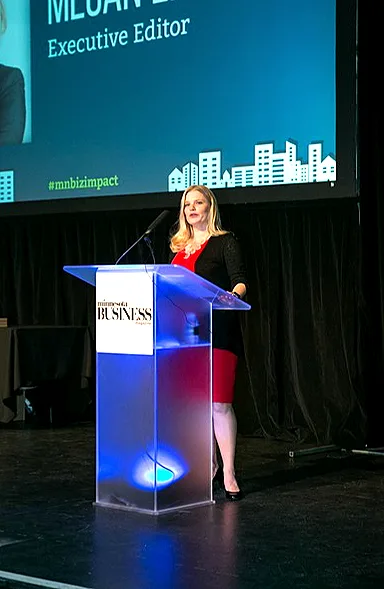
EmceeManufacturing Awards, Minnesota Business
-
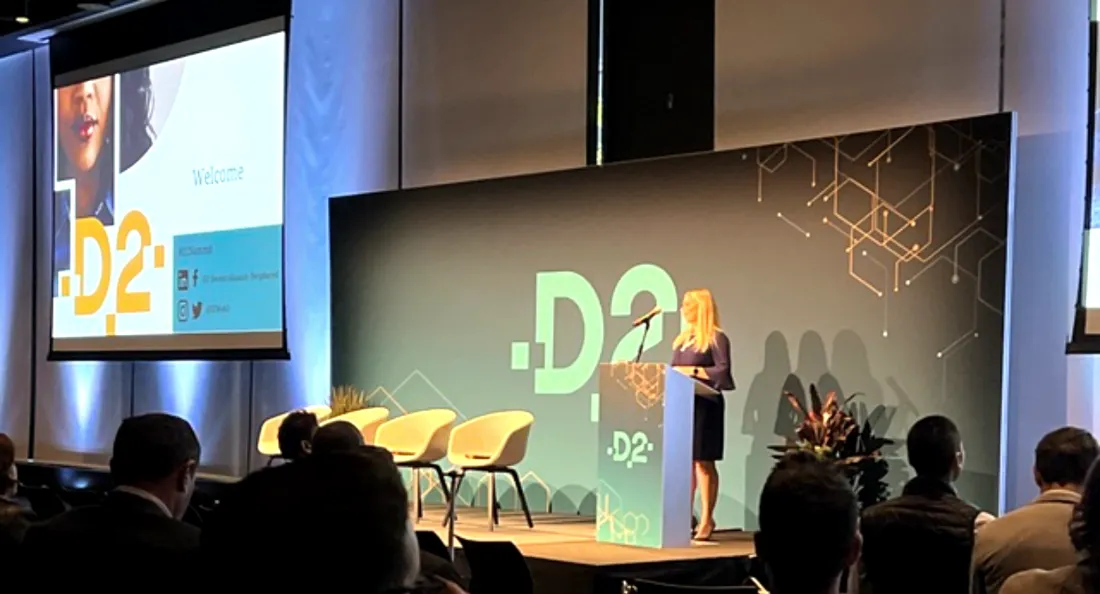
Host and moderatorD2 Summit (Web3 + AI)
-
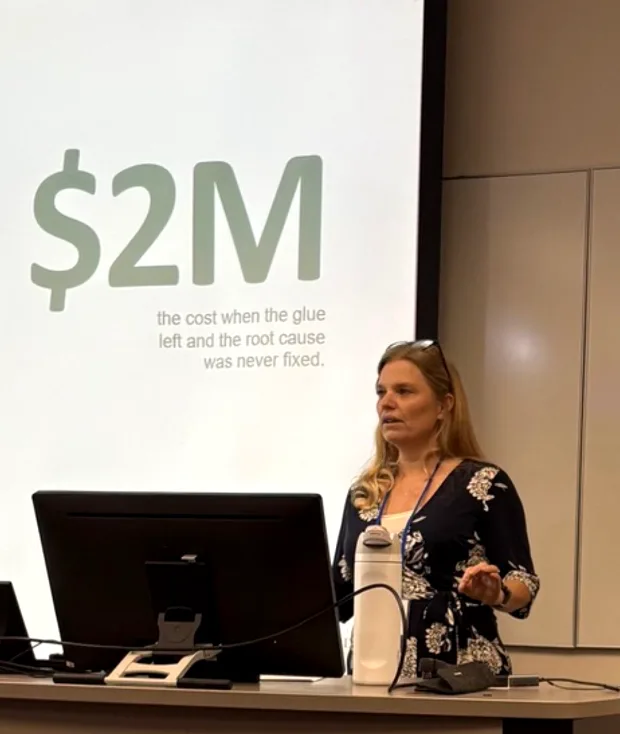
SpeakerRoadmap Marketing Midwest Conference (AI)
-
Breakout speakerPRSA Midwest Conference
-
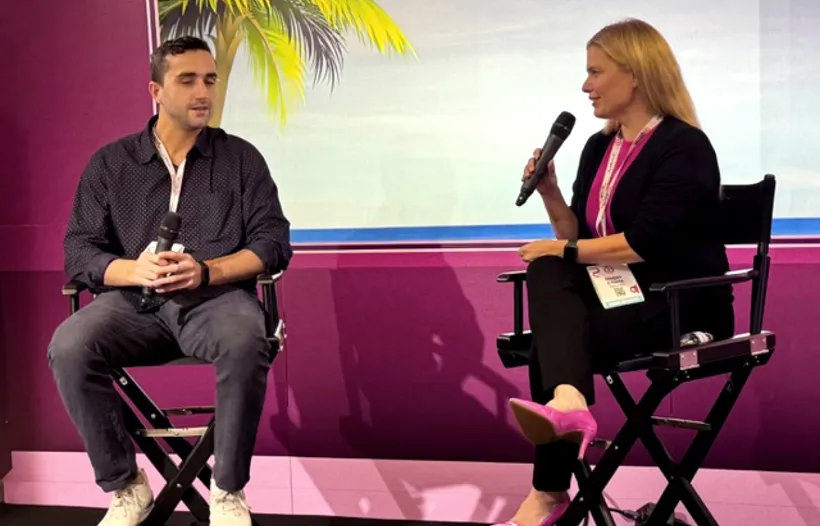
Panel moderatorAdvertising Week
-
HostThe Business Gist podcast
-
On cameraMedia and studio interviews
Where I’ve spoken. Breakout sessions, panels, and moderator at local, regional, and national conferences.
Formats. Breakout sessions, panels, corporate events, and workshops. Association conferences, industry groups, and CEO peer groups are where these land best. I’m also available to media as a subject-matter expert.

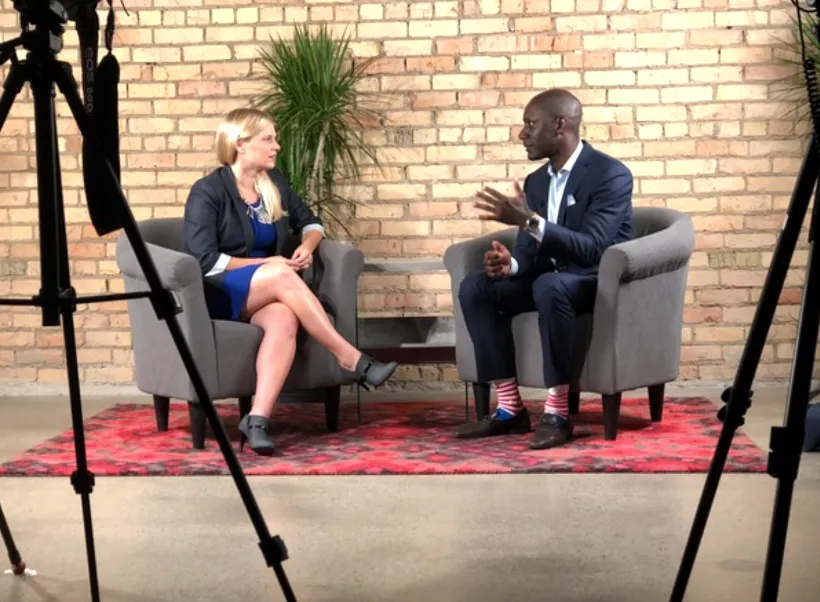
Have a room that needs this?
Tell me who’s in it and what you’re trying to get them thinking about. I’ll tell you which talk fits, or whether I’m the wrong speaker for it.
Think out loud with me.
Most of what goes wrong in a business is a thinking problem wearing a process costume. This is where I work through what I’m seeing — patterns from the sessions, the things teams discover about themselves, and the case for slowing down long enough to think.
Patterns from the room.
What surfaces when a team finally looks at the whole process together, and how often it’s the same six things.
The lost art of thinking.
We trained a generation of leaders to react brilliantly. Here’s what that cost, and how to get think time back.
Invisible work.
The effort nobody books, nobody sees, and nobody replaces until the person carrying it leaves.
Perspective.
Two people watch the same thing happen and see something completely different. The truth is usually in the gap.
Post title goes here
One-line excerpt sits here, no more than two lines on desktop.
DateVideo posts get a play affordance
Everything else about the card stays identical, so video slots in later with no redesign.
DatePost title goes here
Reverse chronological. No categories or tags until there are roughly twenty posts.
DateThe newsletter lives on LinkedIn.
Same writing, delivered where you already are. Subscribe once and it shows up when I publish.
Tell me what’s going on.
Thirty minutes, nothing to prepare. You describe what you’re wrestling with, I’ll tell you whether I can help. If I can’t, I’ll say so and point you toward what you actually need.
Sent.
I read every one of these myself. You’ll hear back within one business day with a few times to talk, or with a straight answer about why I’m not the right fit.
I read every one of these myself. You’ll hear back within one business day with a few times to talk, or with a straight answer about why I’m not the right fit.
Filling this out doesn’t put you on a list, and you won’t hear from anyone who isn’t me.
The problem is never what you think.
Fifteen questions, about five minutes. No email required, no call at the end unless you want one.
You’ll get a straight answer about which current is doing the most damage in your business, what it’s costing you, and what to do first.
{{ resultName }}
{{ resultLead }}
{{ resultBody }}
What it’s costing you: {{ resultCost }}
Start here: {{ resultStart }}
{{ nearTieText }}
This is what Map the Current is for. Eight private conversations with your people, two half-days in a room, and a Nav Map showing what’s really happening and what to do first.
Once you know what should connect to what, we have an integrated partner who builds it.
Based on your answers, there’s no structural current pulling you off course right now. You may still have one decision that’s genuinely hard, or a single process that annoys everyone, but you don’t need anyone to come map your business.
If something’s still nagging at you, that’s a conversation, not an engagement.
If it’s one problem, take a sounding. Half a day, one question, and someone whose only job is making sure you think it all the way through.